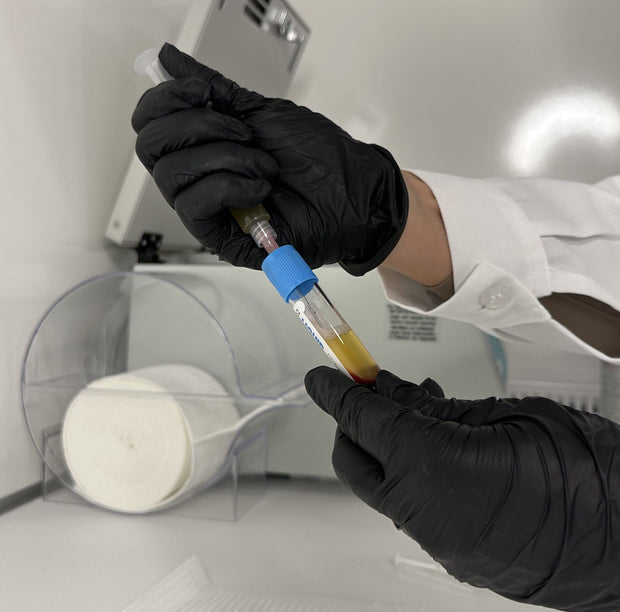

How to Talk to Patients About Exosomes (Honestly and Compliantly)

Few treatments generate as much patient curiosity — or as much marketing hype — as exosomes. That combination puts clinicians in a delicate position: patients arrive excited by bold claims they have seen online, while the evidence and the regulation are still catching up. Talking about exosomes honestly and compliantly is a genuine skill, and getting it right protects your patients, your integrity and your practice.
Start with what is actually known
Be straight about the state of the science. Exosomes are biologically fascinating and genuinely promising, but robust, high-quality human evidence in aesthetics is still limited, and much of what patients have read overstates the certainty. Presenting them as an emerging, evolving treatment — rather than a proven miracle — is both accurate and, in the long run, more trust-building than hype.
Be clear about regulation and sourcing
Patients rarely know that exosomes occupy a regulatory grey area in the UK, or that sourcing and the legality of injectable products are live concerns. You do not need to overwhelm them, but you should be honest about why you offer — or choose not to offer — particular products, and about the care you take over sourcing. Patients respect a clinician who has clearly thought about safety more than one who simply sells the trend.
Mind the advertising rules
How you talk about exosomes in public matters legally as well as ethically. Claims in your marketing must be truthful, not misleading and supportable by evidence — the ASA holds cosmetic advertising to that standard, and exaggerated regenerative claims are exactly the kind of thing that attracts complaints. Keep public-facing language measured and evidence-honest, and save the fuller, balanced discussion for the private consultation.
Manage expectations in the consultation
The consultation is where honesty pays off. Explain what a realistic result looks like, over what timeframe, and how it compares with better-established options such as polynucleotides. A patient who chooses a treatment with clear, realistic expectations is far more likely to be satisfied — and far less likely to feel misled — than one sold on a promise you cannot guarantee.
Let honesty be your differentiator
In a market noisy with overclaiming, measured honesty stands out. Being the clinician who gives patients the balanced truth about exosomes — the promise and the caveats — builds exactly the kind of trust that turns first visits into long relationships. You do not have to hype a treatment to offer it well; you have to be honest about it.
Talk about exosomes the way you would want a treatment explained to you: what is known, what is not, what the rules are, and what to realistically expect. That honesty is not a limitation on your marketing — it is the most persuasive and durable version of it.
References
- Effectiveness of Extracellular Vesicle Application in Skin Aging Treatment and Regeneration: Do We Have Enough Evidence from Clinical Trials? International Journal of Molecular Sciences. 2025;26(5):2354.
- Exosome Therapy in the UK: Patient Safety Warning on New Injectables. Save Face.
- Advertising Standards Authority (ASA) / CAP. Rules on misleading advertising and substantiating claims. asa.org.uk.
- Exosomes in Skin Rejuvenation: Systematic Review of Anti-Aging Effects and Clinical Applications. Dermatology Practical and Conceptual. 2025.

Dr Emmaline Ashley
Aesthetic Doctor · GMC 7582958 · COO of Harley Supplies
Dr Emmaline Ashley is an aesthetic doctor and published researcher in aesthetic medicine, with peer-reviewed work spanning product safety, regenerative treatments and medical education. She is a member of the Acquisition Aesthetics clinical faculty.